MailerLite is the best Constant Contact alternative for most small businesses in 2026. It starts at $12 per month, includes automation on every paid plan, and does not meter your sends with an allowance. Brevo wins for large lists on a budget, and Omnisend wins for ecommerce stores that need email and SMS together.
Constant Contact's pricing punishes growth. The Lite plan costs $12 per month at 500 contacts but jumps to $30 at 1,000 contacts, a 150% increase for doubling a small list. Each plan also meters sends with a monthly allowance of 10 to 24 times your contact count, and overage emails cost $0.002 each, according to Omnisend's 2026 pricing breakdown. Costs reach $425 per month at 25,000 contacts.
Email remains the highest-return channel in marketing. Litmus research puts the average return at $36 for every $1 spent. Picking the right platform protects that return. We tested seven Constant Contact competitors on pricing, automation, deliverability tools, and ease of use. Start with our complete guide to the best AI marketing tools if you are building a full stack, then use this list to replace Constant Contact specifically.
Table of Contents
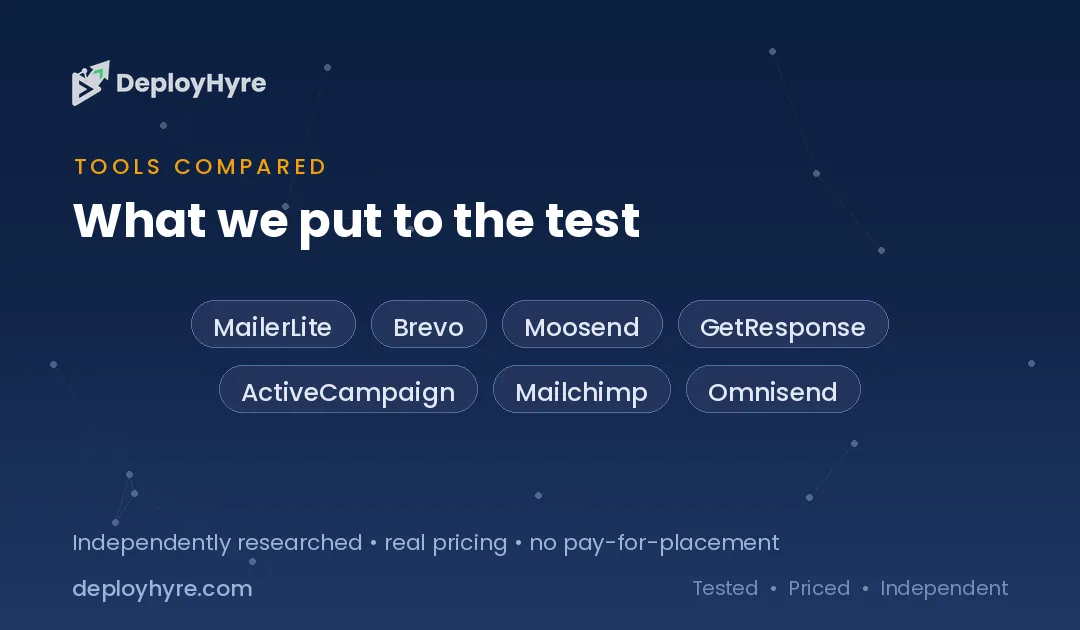
Quick Comparison: Top 7 Constant Contact Alternatives
| Platform | Best For | Starting Price | Key Advantage |
|---|---|---|---|
| MailerLite | Best overall value | $12/mo (500 subscribers) | Unlimited sends, automation included |
| Brevo | Large lists on a budget | $9/mo (5,000 emails) | Unlimited contact storage |
| Moosend | Lowest price | $9/mo (500 contacts) | Unlimited emails on Pro |
| GetResponse | All-in-one with webinars | $13/mo (500 contacts) | Webinars and funnels built in |
| ActiveCampaign | Advanced automation | $15/mo (1,000 contacts) | Deepest workflow builder |
| Mailchimp | All-round marketing suite | $20/mo (500 contacts, Standard) | Largest integration library |
| Omnisend | Ecommerce email + SMS | $16/mo (500 contacts) | Prebuilt store workflows |
Why Switch From Constant Contact?
Users switch from Constant Contact for three reasons: contact-tier pricing rises steeply, monthly send allowances add overage fees competitors do not charge, and automation trails modern platforms. Most alternatives on this list include unlimited sends and deeper workflows at a lower price.
Constant Contact built its reputation on simplicity, event tools, and strong phone support. Those strengths still hold. The weakness is value at scale. The Lite plan's jump from $12 to $30 at the 1,000-contact mark is the steepest early-growth increase among major platforms. Standard costs $110 per month at 10,000 contacts, and Premium reaches $425 at 25,000.
The send allowance is the hidden cost. Lite caps sends at 10 times your contact count per month, and every email past the cap bills at $0.002. A 2,000-contact list running a daily newsletter clears that allowance in three weeks. Platforms like MailerLite and Moosend simply include unlimited sends. Automation is the third gap: Constant Contact covers welcome series and basic paths, while ActiveCampaign and Omnisend ship multi-branch workflows with scoring and revenue tracking.
The 7 Best Constant Contact Alternatives
1 MailerLite: Best Overall Constant Contact Alternative
MailerLite delivers more email platform for less money at every list size.
What it does well. MailerLite includes unlimited monthly sends, automation workflows, landing pages, and forms on every paid plan. There is no send allowance and no overage fee. The editor is modern and fast, deliverability ranks near the top of independent tests, and pricing at 1,000 contacts is roughly half of Constant Contact's Lite tier at the same size.
Key features:
- Unlimited email sends with no overage charges
- Visual automation builder with multi-trigger workflows
- Landing pages, pop-ups, and embedded forms included
- Free plan for up to 1,000 subscribers and 12,000 emails per month
- AI writing assistant and campaign generator
Pricing. The Growing Business plan starts at $12 per month for 500 subscribers. The Advanced plan adds unlimited users and custom HTML from $18 per month.
Best for: Small businesses that want to stop paying overage fees and tier jumps.
Limitations. No event management tools, and phone support is not offered.
2 Brevo: Best for Large Lists on a Budget
Brevo stores unlimited contacts and charges only for what you send.
What it does well. Brevo flips Constant Contact's model. Contacts are free and unlimited on every plan; you pay for monthly email volume. A nonprofit with 20,000 subscribers that sends one newsletter a month pays a fraction of Constant Contact's $300-plus equivalent tier. SMS, WhatsApp, a built-in CRM, and transactional email round out the platform.
Key features:
- Unlimited contact storage on all plans
- Email, SMS, WhatsApp, and transactional sending
- Built-in CRM with deal pipelines
- Marketing automation on paid tiers
- Free plan with 300 emails per day
Pricing. The Starter plan costs $9 per month for 5,000 emails. A/B testing requires the $18 Business plan.
Best for: Nonprofits, associations, and any big list that emails once or twice a month.
Limitations. Frequent senders burn through send volume fast. Our Brevo alternatives guide covers when the model works against you.
3 Moosend: Cheapest Constant Contact Alternative
Moosend gives you unlimited sends and automation at the lowest entry price.
What it does well. Moosend's Pro plan bundles unlimited emails, automation workflows, landing pages, and transactional email for $9 per month. The automation builder includes prebuilt recipes for onboarding, re-engagement, and abandoned carts. Teams coming from Constant Contact report a short learning curve because the interface stays simple.
Key features:
- Unlimited email sends on every paid plan
- Prebuilt automation recipes
- Landing pages and subscription forms included
- AI subject line and product recommendation tools
- 30-day free trial with no credit card
Pricing. The Pro plan starts at $9 per month for 500 contacts with unlimited emails. Enterprise pricing is custom.
Best for: Budget-first senders who still want automation and landing pages.
Limitations. No event tools, no phone support, and a smaller template library than Constant Contact.
4 GetResponse: Best All-in-One With Webinars
GetResponse matches Constant Contact's event strength and adds marketing depth.
What it does well. GetResponse is the closest like-for-like replacement for teams that use Constant Contact's event and engagement features. Webinars, sales funnels, a website builder, and paid ads tools ship in one platform. Automation is stronger than Constant Contact's, and the Starter plan undercuts Lite as lists grow past 1,000 contacts.
Key features:
- Built-in webinars and registration pages
- Conversion funnels and a website builder
- Visual marketing automation
- AI campaign and subject line generator
- Free plan for up to 500 contacts
Pricing. Paid plans start at $13 per month for 500 contacts. Costs scale in contact tiers, so compare your exact list size in our GetResponse alternatives guide before committing.
Best for: Teams replacing Constant Contact's events with webinars and funnels.
Limitations. Tier jumps get sharp in the mid range, and the interface bundles tools many senders skip.
5 ActiveCampaign: Best for Advanced Automation
ActiveCampaign turns email from broadcasts into behavior-driven campaigns.
What it does well. ActiveCampaign's workflow builder chains conditions, splits, goals, and lead scoring far beyond Constant Contact's automation paths. The built-in sales CRM ties email engagement to deal stages, which suits service businesses that nurture leads over weeks. Free migration is included, and the template library covers 900+ integrations.
Key features:
- Multi-step automations with conditional branching
- Lead scoring and site tracking
- Built-in sales CRM with pipeline automation
- 900+ integrations including Shopify and Salesforce
- Predictive sending powered by machine learning
Pricing. The Starter plan begins at $15 per month for 1,000 contacts. Full automation and CRM arrive on the $49 Plus plan.
Best for: Service businesses and agencies that outgrew simple newsletters.
Limitations. Steeper learning curve than Constant Contact, and pricing climbs with features.
6 Mailchimp: Best All-Round Marketing Suite
Mailchimp is the safest familiar switch with the biggest ecosystem.
What it does well. Mailchimp pairs email with landing pages, social ads, and AI content tools, and its 300+ native integrations lead the category. Reporting and audience benchmarking are more detailed than Constant Contact's. For small businesses whose bookkeeper, POS, or CRM already connects to Mailchimp, migration friction is near zero.
Key features:
- 300+ native integrations
- AI content generator and send-time optimization
- Landing pages, social ads, and postcards
- Prebuilt customer journeys
- Strong deliverability reputation
Pricing. The Standard plan starts at $20 per month for 500 contacts; Essentials starts at $13 with limited journeys. Our Mailchimp vs Brevo comparison shows how it stacks against send-based pricing.
Best for: Small businesses that want one familiar tool connected to everything.
Limitations. Charges for unsubscribed contacts, and mid-size lists get expensive fast.
7 Omnisend: Best for Ecommerce Stores
Omnisend replaces Constant Contact for stores that live on abandoned carts.
What it does well. Omnisend is built for online stores. Prebuilt cart abandonment, browse abandonment, and post-purchase workflows go live in minutes, and email and SMS share one automation builder. Shopify, WooCommerce, and BigCommerce sync products and orders automatically, and revenue attribution shows exactly what each automation earns.
Key features:
- Prebuilt ecommerce automation workflows
- Email and SMS in a single builder
- Product picker and dynamic discount codes
- Deep Shopify and WooCommerce sync
- 24/7 live chat support on all plans
Pricing. The Standard plan starts at $16 per month for 500 contacts.
Best for: Shopify and WooCommerce stores that want automations tied to revenue.
Limitations. Service businesses and nonprofits get less value from the store-first feature set. See our Omnisend alternatives guide for its trade-offs.
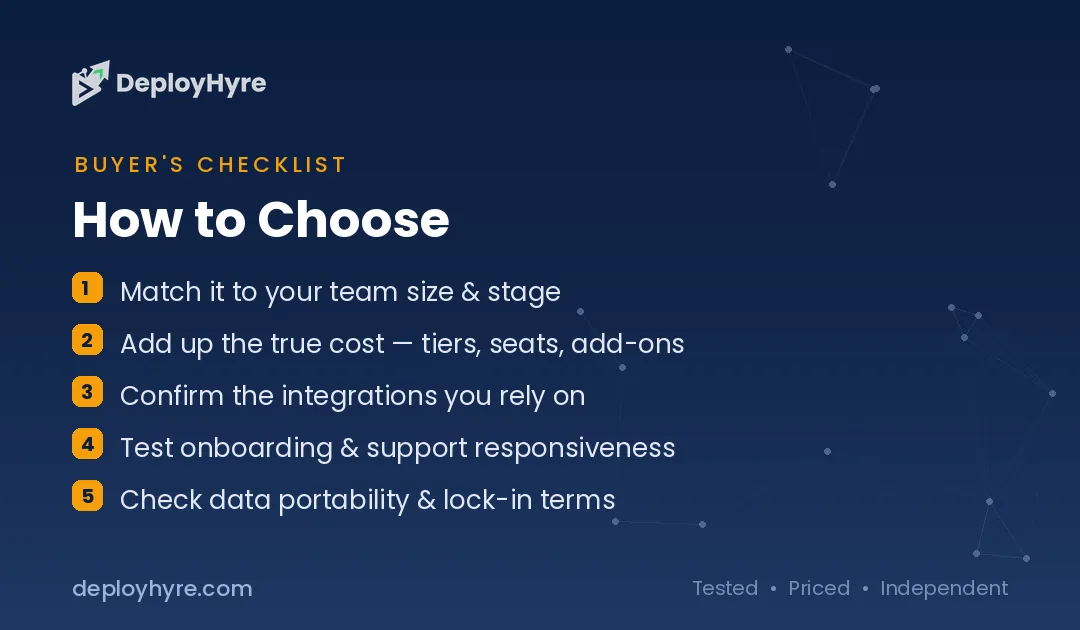
How Should You Choose the Right Constant Contact Alternative?
Price your real list size and send frequency first, then match one must-have feature. Frequent senders need unlimited-send platforms like MailerLite or Moosend. Big quiet lists save with Brevo. Event-driven organizations fit GetResponse, and stores fit Omnisend.
Start by pulling two numbers from your Constant Contact dashboard: active contacts and emails sent last month. Price those numbers on three alternatives. The comparison usually settles itself, because Constant Contact's combination of contact tiers plus send allowances is the most expensive structure in this group at almost every size.
Then audit features you actually use. Event registration and phone support are Constant Contact's rarest strengths; GetResponse covers events via webinars, while most rivals rely on chat support. Check integration needs last. Every platform here imports your contacts and templates in an afternoon, and unsubscribed contacts should not follow you: unlike Constant Contact and Mailchimp, MailerLite does not bill for them.
How We Evaluated These Platforms
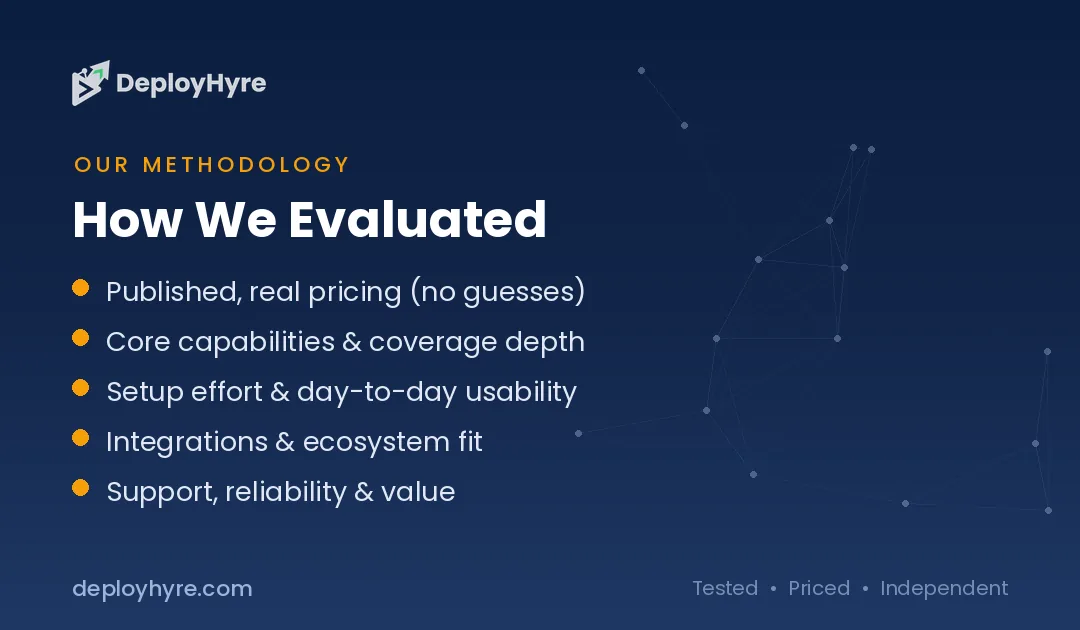
We scored each platform on five factors: pricing transparency, automation depth, deliverability tooling, ease of use, and migration support. Every price was verified against the vendor's public pricing page in 2026, and we weighted real switching pain points over feature checklists.
We built test campaigns on each platform, ran the same three-step welcome automation, and compared editor speed, list import handling, and reporting clarity. Pricing figures come from vendor pricing pages and independent trackers like Marketer's Choice. We do not accept payment for placement, and affiliate relationships never change rankings. Our best AI email marketing software guide explains the wider testing methodology.
The Bottom Line
MailerLite is the best Constant Contact alternative for most small businesses in 2026. It removes send allowances, includes automation on every plan, and costs roughly half as much as lists grow. Pick Brevo for large quiet lists, GetResponse for events and webinars, ActiveCampaign for automation depth, and Omnisend for ecommerce.
Constant Contact still earns its keep for organizations that lean on phone support and event registration. Everyone else is paying a legacy premium. Export your list, price two rivals, and test one free plan before your next renewal. If you are still comparing categories, our AI marketing tools guide maps every channel, and our AWeber alternatives guide covers another legacy platform switchers leave for the same reasons.

Frequently Asked Questions
What is the best Constant Contact alternative?
MailerLite is the best Constant Contact alternative for most users in 2026. It starts at $12 per month, includes unlimited sends with no overage fees, and ships automation, landing pages, and forms on every paid plan.
Is there a cheaper alternative to Constant Contact?
Moosend and Brevo are both cheaper than Constant Contact. Moosend starts at $9 per month for 500 contacts with unlimited emails. Brevo starts at $9 per month for 5,000 emails with unlimited contact storage, which suits large lists that send rarely.
Why is Constant Contact so expensive?
Constant Contact combines contact-tier pricing with monthly send allowances. The Lite plan jumps from $12 to $30 per month at 1,000 contacts, sends are capped at 10 to 24 times your contact count, and overage emails bill at $0.002 each. Most rivals include unlimited sends.
What is the best Constant Contact alternative for nonprofits?
Brevo is the best Constant Contact alternative for most nonprofits. It stores unlimited contacts free and charges only for emails sent, so a large donor list that emails monthly pays $9 to $18 per month instead of hundreds on contact-tier pricing.
Does Constant Contact have a free plan?
No. Constant Contact offers a free trial but no permanent free plan. Paid plans start at $12 per month for 500 contacts. MailerLite, Brevo, Mailchimp, and GetResponse all offer permanent free tiers you can test before switching.

David Austin is a technology writer and software analyst at DeployHyre, where he covers AI tools, SaaS platforms, cloud hosting, and business automation. He focuses on hands-on comparisons of pricing, features, and real-world performance so teams can pick the right software with confidence.
Know AI, SaaS, or cloud tools inside out? Pitch a guest post and get in front of thousands of buyers researching their next tool.
Pitch your idea →