TL;DR: n8n and Zapier both automate work, but they aim at different users. n8n is open-source, self-hostable, and cheap at scale, with strong AI-agent and code features for technical teams. Zapier is the easiest no-code option with the largest app library, but you pay a premium and cannot self-host. Pick n8n for control and cost. Pick Zapier for speed and reach.
Automation is no longer optional. The workflow automation market is worth about $26 billion in 2026, and it keeps growing fast. Two tools sit at the center of that boom: n8n and Zapier.
They solve the same problem in opposite ways. Zapier is the polished cloud giant. n8n is the open-source challenger that has exploded in popularity, passing 150,000 GitHub stars and a $2.5 billion valuation in 2025.
So which one should you use in 2026? This guide breaks down pricing, features, AI power, and the real trade-offs. If you are still mapping out your stack, start with our AI agents and automation guide for the bigger picture.
Quick Comparison: n8n vs Zapier
| Feature | n8n | Zapier |
|---|---|---|
| Pricing model | Per workflow execution | Per task (action) |
| Self-hosting | Yes, free Community Edition | No, cloud-only |
| Free / open source | Source-available, fair-code | Closed source, free tier only |
| App integrations | 500+ plus any API | 8,000+ apps |
| AI features | Native AI Agent nodes, LangChain | AI actions, agents, Copilot |
| Builder style | Visual + full code / branching | No-code, mostly linear |
| Best for | Developers, high volume, control | Non-technical teams, speed |
How Do n8n and Zapier Pricing Models Differ?
n8n charges per workflow execution, while Zapier charges per task, which makes n8n far cheaper at scale. One n8n run counts as a single execution no matter how many steps it has. In Zapier, every action inside a Zap burns a separate task, so complex workflows drain your quota fast.
The gap is real. n8n Cloud starts at $20 per month for 2,500 executions, and each execution runs your whole workflow. Zapier’s paid plans start around $19.99 to $29.99 per month for a small task allowance, and a four-step Zap uses four tasks per run.
For heavy or logic-rich automations, n8n’s model saves serious money. Zapier stays fine for simple, low-volume flows.
Is n8n Really Open Source and Self-Hostable?
Yes. n8n is source-available under a fair-code license and can be self-hosted for free, while Zapier is closed-source and cloud-only. This is the biggest structural difference between the two tools.
You can deploy the n8n Community Edition on your own server at no license cost. On a cheap VPS, that often runs a few dollars a month with no execution limits at all. You control the data, the uptime, and the compliance setup.
Zapier gives you none of that. It runs on Zapier’s US-based cloud, and your data lives on their servers. That is simpler to start, but you trade away control. For GDPR, HIPAA, or SOC 2 needs, self-hosted n8n is often the safer path.
Which Has the Bigger App Library?
Zapier wins on raw app coverage with over 8,000 integrations, while n8n offers 500+ native nodes plus a universal API connector. If you need a niche SaaS tool connected in one click, Zapier almost always has it.
Zapier’s catalog is the largest in the industry, connecting more than 8,000 apps with polished, prebuilt actions. That breadth is its core selling point.
n8n counters with fewer native integrations but a powerful HTTP Request node that connects to any API. If a service has an API, n8n can reach it, though it takes more setup. For common apps, both cover the essentials. For obscure tools, Zapier is faster.
Which Is Easier to Use?
Zapier is easier for non-technical users thanks to its clean no-code builder, while n8n has a steeper learning curve but far more power. Zapier is built so anyone can wire up a Zap in minutes without touching code.
Zapier uses a simple trigger-then-action flow. It guides you step by step, which is ideal for marketers, founders, and small teams. Most people ship their first automation the same day.
n8n uses a visual node canvas that supports branching, loops, sub-workflows, and parallel execution. That flexibility is great for complex jobs, but it feels heavier at first. If you value speed over control, Zapier wins here. If you want depth, n8n rewards the effort.
Which Is Better for AI and Complex Workflows?
n8n leads on AI agents and complex logic, while Zapier offers simpler AI actions for everyday tasks. In 2026, n8n’s most-used building block is its AI Agent node, built on the LangChain framework.
n8n lets you chain models, add memory, connect tools, and orchestrate multi-agent workflows at scale. It is designed for people building real AI systems, not just single prompts.
Zapier has strong AI features too, including AI actions, agents, and Copilot to help build Zaps. They are easy and useful for content, summaries, and routing. But for custom, branching AI pipelines, n8n gives you more room. Want a deeper look? See our AI agents and automation guide.
How Much Developer Control and Code Do You Get?
n8n gives developers full code control with JavaScript and custom nodes, while Zapier limits deep customization. This is where n8n clearly targets technical users.
Inside n8n you can run JavaScript, access environment variables, call external services, and build custom reusable nodes. You can also version workflows with Git on higher plans. It behaves like part of your engineering stack.
Zapier does offer Code steps and webhooks, so it is not fully closed off. But it is built to keep you inside its guardrails. If your team writes code and wants to extend the platform, n8n is the stronger fit by a wide margin.
Which Is More Reliable at Scale?
Both scale well, but n8n’s self-hosted model and per-execution pricing make heavy volume cheaper and more predictable. A single n8n instance can handle a very high throughput of executions per second on queue mode.
Because self-hosted n8n has no execution cap, your cost stays flat as volume climbs. You only pay for your server. That predictability is a big draw for high-volume teams.
Zapier is a mature, managed platform with strong uptime and zero infrastructure to babysit. Its downside at scale is cost: task-based billing rises quickly as your automations grow. For enterprise reliability without ops work, Zapier delivers. For volume without runaway bills, n8n wins.
What About Support and Community?
Zapier offers structured support and huge official documentation, while n8n leans on a large, active open-source community. Your preference depends on how you like to solve problems.
Zapier provides help centers, email support, and priority support on higher plans. Its enterprise tier adds dedicated help. That polish suits teams that want a vendor to call.
n8n backs a fast-growing community forum, deep docs, and thousands of shared workflow templates. With 230,000+ active users, answers are usually a search away. Paid n8n plans add direct support too. Both are well supported, just in different styles.
n8n vs Zapier: Which Should You Choose?
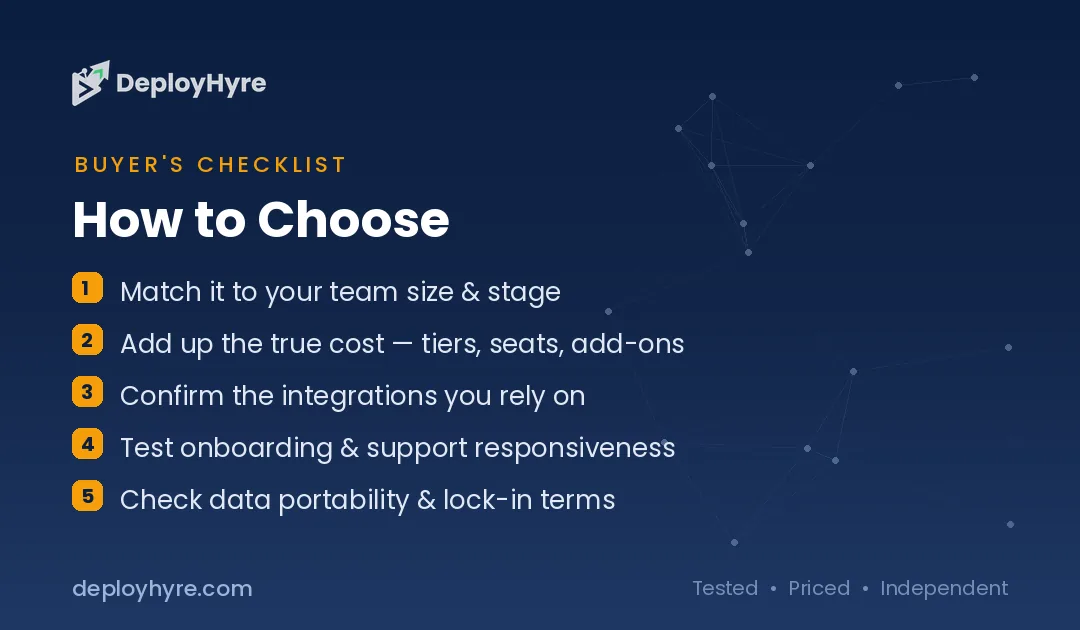
Your best pick depends on who you are and what you value.
Choose Zapier if you are:
-
A non-technical founder, marketer, or small team
-
Someone who wants automations live in minutes
-
Connecting many niche or uncommon apps
-
Happy to pay a premium for zero infrastructure
Choose n8n if you are:
-
A developer or technical team that wants code control
-
Running high-volume or complex, branching workflows
-
Building serious AI agents and pipelines
-
Focused on data privacy, self-hosting, or low cost at scale
If you are weighing other options, compare Zapier vs Make for another popular matchup, or browse our roundup of the best AI automation tools to see the full field.
The Bottom Line
n8n and Zapier are both excellent, and neither is a wrong choice. The right one depends on your team and your budget.
Pick Zapier for the fastest path, the biggest app library, and true no-code simplicity. Pick n8n for open-source control, cheap scaling, deep AI workflows, and full developer power. Many teams even run both: Zapier for quick wins, n8n for the heavy lifting.
Frequently Asked Questions
Is n8n cheaper than Zapier?
Usually yes. n8n charges per workflow execution, so a complex flow costs the same as a simple one. Zapier charges per task, so multi-step Zaps drain your quota faster. Self-hosted n8n has no execution limit, which makes it far cheaper at high volume.
Can you self-host Zapier like n8n?
No. Zapier is cloud-only and runs entirely on its own US-based servers. n8n offers a free, source-available Community Edition you can host on your own VPS or private cloud, which gives you full data control for GDPR, HIPAA, or SOC 2 needs.
Does n8n have more integrations than Zapier?
No. Zapier leads with over 8,000 prebuilt app integrations. n8n offers 500+ native nodes, but its HTTP Request node can connect to almost any API with extra setup. For rare or niche apps, Zapier is faster to connect out of the box.
Which is better for AI workflows, n8n or Zapier?
n8n is stronger for advanced AI work. Its AI Agent node, built on LangChain, supports memory, tools, and multi-agent orchestration. Zapier offers simpler AI actions and agents that are great for everyday tasks like summaries and routing, but less flexible for custom pipelines.
Is n8n hard to learn compared to Zapier?
Yes, n8n has a steeper learning curve. It uses a visual node canvas with branching, loops, and code, which suits developers. Zapier is designed for non-technical users and lets most people build a working automation within their first day.
Know AI, SaaS, or cloud tools inside out? Pitch a guest post and get in front of thousands of buyers researching their next tool.

David Austin is a technology writer and software analyst at DeployHyre, where he covers AI tools, SaaS platforms, cloud hosting, and business automation. He focuses on hands-on comparisons of pricing, features, and real-world performance so teams can pick the right software with confidence.