TL;DR: Pick Claude Code if you want the strongest agentic coding on the market and will pay a subscription to get it. Pick Gemini CLI if you want an open-source terminal agent with a huge context window and lower cost. Claude Code wins on raw skill. Gemini CLI wins on value and openness.
Terminal AI coding agents went mainstream fast. Gemini CLI alone crossed 100,000 GitHub stars and 6,000 merged community pull requests within its first year. That kind of adoption tells you the command line is now a real home for AI pair programming, not a demo.
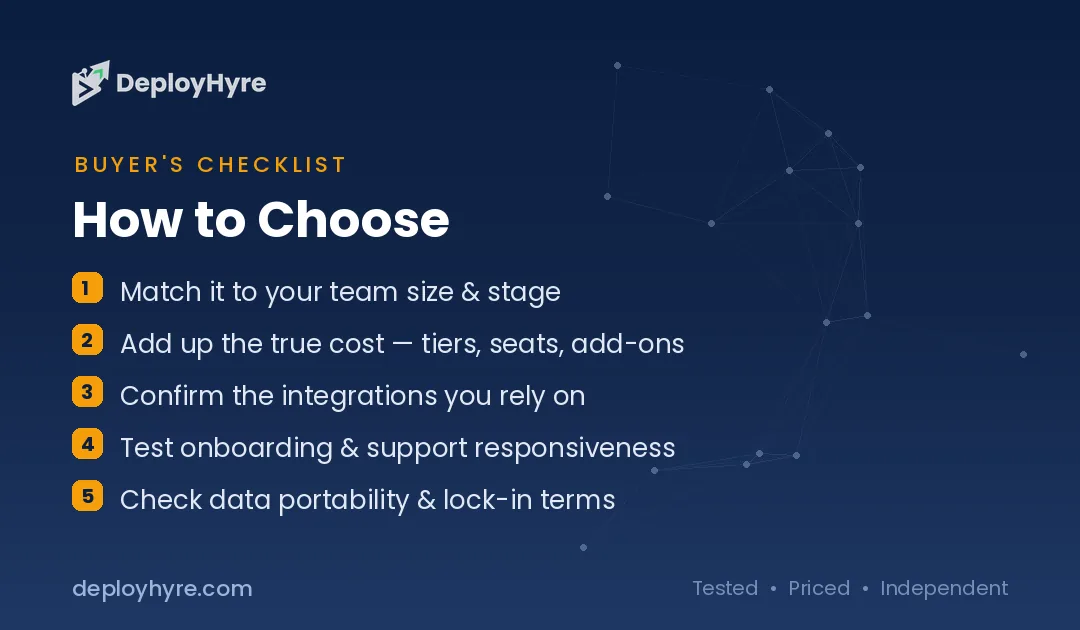
So the question stops being “should I use a terminal agent” and becomes “which one.” This guide breaks down claude code vs gemini cli across price, models, context, and workflow, then gives you a straight verdict. New to this whole category? Start with our guide to the best AI coding tools first, then come back here to compare these two head to head.
Quick Comparison: Claude Code vs Gemini CLI
| Feature | Claude Code | Gemini CLI |
|---|---|---|
| Pricing | Paid plan required (Pro/Max/Team) | Free tier, then paid API keys |
| Free tier | None (Pro is the floor) | Yes (generous, in transition mid-2026) |
| Models | Claude Opus 4.8 / Sonnet | Gemini 2.5 Pro / Flash |
| Context window | Large (Claude models) | Up to 1M tokens |
| Open source | No | Yes (Apache 2.0) |
| IDE / terminal | Terminal + IDE integrations | Terminal-first |
| Best for | Max coding quality, teams | Value, big context, tinkerers |
How much do Claude Code and Gemini CLI cost?
Claude Code needs a paid plan and Gemini CLI starts free, so Gemini CLI wins pure cost. Claude Code requires at least the Pro subscription, with Pro, Max 5x, Max 20x, and Team tiers plus a direct API path. Gemini CLI gives you a real free tier before any spend.
Real usage matters more than sticker price. Anthropic’s own enterprise figures put Claude Code at roughly $150 to $250 per developer per month, with 90% of users under $30 on any active day. That is a serious tool with a serious price.
Is Gemini CLI free, and what does the free tier include?
Yes, Gemini CLI has a free tier, but it is changing in 2026. Google launched it with 60 model requests per minute and 1,000 requests per day at no charge, which was one of the most generous allowances in the category.
Here is the honest catch. Google ended free Google-account access to the hosted backend on June 18, 2026, moving free users toward a successor product while paid API keys and Vertex AI credentials keep working. If you rely on the free tier today, check your current access before you commit.
Which has better models and SWE-bench performance?
Claude Code wins on raw benchmark performance, and it is not especially close. Claude Code runs Claude Opus 4.8, which leads agentic coding at 88.6% on SWE-bench Verified as of mid-2026. That is the top actively available Claude score.
Gemini CLI runs Gemini 2.5 Pro and Flash, strong general models tuned for reasoning and huge context. They are capable and cheap to run, but on published head-to-head coding benchmarks, Claude’s frontier models set the pace. If your work is gnarly refactors and multi-file bug hunts, that gap shows up in real results.
How big is the context window on each?
Gemini CLI wins context size with up to a 1 million token window. Gemini 2.5 Pro gives you access to a 1M token context window, which is massive. You can point it at a large codebase and let it reason across far more files at once.
Claude Code also handles large context well through Claude’s models, but Gemini’s 1M ceiling is the headline number here. For monorepos, long logs, or dumping an entire service into one session, Gemini CLI has the edge. For focused, high-quality edits, raw context size matters less than model skill.
Which is better at agentic tasks?
Claude Code is the stronger autonomous agent, while Gemini CLI is a very capable free alternative. Claude Code pairs a top model with mature agentic tooling and posts leading results, including 78.9% on Terminal-Bench 2.1 with Opus 4.8, the top usable Claude pairing.
Gemini CLI is no slouch. It ships built-in tools for Google Search grounding, file operations, shell commands, and web fetch, plus Model Context Protocol support for custom integrations. It plans, edits, and runs commands like a real agent. Claude simply finishes harder tasks more often. Want a third contender? See our Claude Code vs Codex breakdown.
Which is more open source and extensible?
Gemini CLI wins openness by a mile because it is fully open source. Gemini CLI ships under the Apache 2.0 license, so you can read the code, fork it, and extend it. That openness drove those 6,000-plus community contributions.
Claude Code is closed source. It is polished and well supported, but you cannot inspect or fork the tool itself. Both support MCP for connecting external tools, so extensibility exists on each side. If open code is a hard requirement for your team or your audit process, Gemini CLI is the only choice of the two.
How is the terminal and IDE workflow on each?
Both live in your terminal, but Claude Code has broader IDE integration. Gemini CLI is terminal-first and designed for developers who live in the command line. It is fast, focused, and stays out of your way.
Claude Code also runs in the terminal but extends into IDE integrations, giving you more surface area if you split time between shell and editor. If you want to compare a terminal agent against an editor-native tool, our Cursor vs Claude Code guide covers exactly that trade-off.
Which is easier to set up?
Both install fast, and Gemini CLI is the simplest to try for free. Gemini CLI installs via npm and, historically, you signed in with a Google account and were coding in minutes. That low barrier is a big part of its adoption story.
Claude Code installs quickly too, but it gates behind a paid subscription before you can do meaningful work. So Gemini CLI wins the “zero to first prompt with no card” test, while Claude Code wins the “already paying and want the best” scenario. Neither setup is hard.
Who is each tool best for?
Claude Code is best for professionals who want maximum quality, and Gemini CLI is best for value seekers and open-source fans. If you ship production code daily and the model finishing the task matters more than the monthly bill, Claude Code earns its price. If you are a student, a hobbyist, a startup watching burn, or a team that needs open code, Gemini CLI fits better.
Neither is objectively “the best.” They optimize for different things. Match the tool to what you actually value.
Claude Code vs Gemini CLI: Which Should You Choose?
Choose Claude Code if you are a professional developer or team. You get the top agentic coding scores, mature IDE and terminal support, and a tool built to grind through hard, multi-file work. You pay for it, but the output quality justifies the cost for people who code for a living.
Choose Gemini CLI if you want a free, open-source starting point. You get a huge 1M token context window, Apache 2.0 code you can fork, and one of the friendliest on-ramps in the category. Just confirm your access after the 2026 backend changes, and be ready to plug in a paid API key if you scale up.
Choose based on your priority, not hype. Quality-first? Claude Code. Cost and openness first? Gemini CLI. Most developers already know which of those two sentences describes them.
The Bottom Line
Claude Code is the premium pick and Gemini CLI is the value pick. Claude Code leads on SWE-bench and agentic skill, so it is the tool to beat when quality is the goal. Gemini CLI counters with a free tier, a 1M token window, and open-source code, which makes it the smarter budget and tinkerer choice. In the claude code vs gemini cli debate, there is no single winner, only the right winner for you.
Ready to try the leader in agentic coding?
Want the open-source, big-context alternative?

Frequently Asked Questions
Is Claude Code better than Gemini CLI?
Claude Code is better at raw coding quality, leading on SWE-bench Verified with Claude Opus 4.8. Gemini CLI is better on value and openness, with a free tier, a 1M token context window, and Apache 2.0 open-source code. The best tool depends on whether you prioritize quality or cost.
Is Gemini CLI free to use?
Gemini CLI launched with a generous free tier of 60 requests per minute and 1,000 requests per day on a personal Google account. However, Google ended free hosted-backend access for free users on June 18, 2026, so check your current access. Paid API keys and Vertex AI credentials still work.
Does Claude Code have a free tier?
No, Claude Code does not have a free tier. It requires at least the Claude Pro subscription, with Max and Team tiers above that, plus a direct API option. If you want a no-cost terminal agent, Gemini CLI is the better starting point.
Which has a bigger context window, Claude Code or Gemini CLI?
Gemini CLI has the larger headline context window, up to 1 million tokens through Gemini 2.5 Pro. That makes it strong for reasoning across large codebases. Claude Code handles large context well too, but Gemini’s 1M ceiling is the bigger number.
Is Gemini CLI open source?
Yes, Gemini CLI is fully open source under the Apache 2.0 license, so you can inspect, fork, and extend the code. It has drawn over 6,000 community pull requests. Claude Code is closed source, though both tools support the Model Context Protocol for extensions.
Know AI, SaaS, or cloud tools inside out? Pitch a guest post and get in front of thousands of buyers researching their next tool.

David Austin is a technology writer and software analyst at DeployHyre, where he covers AI tools, SaaS platforms, cloud hosting, and business automation. He focuses on hands-on comparisons of pricing, features, and real-world performance so teams can pick the right software with confidence.