Proposals are won on quality and lost on time. Teams that answer faster, with sharper, more tailored responses, win more bids. AI proposal software is now the difference between scrambling and shipping a polished response with hours to spare.
Table of Contents
For the full picture, see our complete guide to AI writing tools.
The category has matured fast. As of 2026 there are 17+ dedicated AI proposal platforms, with pricing ranging from $49/month to $2,000+/month, and the market has split into three tiers: retrieval-first tools that reuse existing content, generation-first tools that write from scratch, and full-lifecycle platforms that run the whole revenue workflow.
This guide tests the best AI for proposal writing in 2026, grouped by who you are. For broader context, see our AI for business guide and our roundup of the best AI tools for sales teams.
What Is AI Proposal Writing Software?
AI proposal writing software drafts and assembles responses to RFPs and bids by generating narrative, reusing your approved content library, and aligning answers to what the buyer asked. Unlike a generic AI writer, it understands proposal structure, pulls from past winning answers, and keeps compliance and messaging consistent across long, multi-section documents.
The three tiers matter when choosing. Retrieval-first tools shine if you have a big content library, generation-first tools shine for net-new narrative, and full-lifecycle tools fit teams that want proposals handled inside a broader sales workflow.
Quick Comparison: 8 Best AI Proposal Tools
| Tool | Best For | Starting Price | Tier |
|---|---|---|---|
| Bidara | Small and mid-market teams | $299/mo | Generation + library |
| AutogenAI | AI-first writing quality and ROI | Custom | Generation-first |
| Loopio | Enterprise content libraries | Custom | Retrieval-first |
| Responsive | Enterprise RFP management | Custom | Retrieval-first |
| GovDash | Federal contractors (FedRAMP) | Custom | Full-lifecycle |
| DeepRFP | Consultants and lean teams | Mid-tier | Generation-first |
| Inventive AI | High-stakes, precise RFPs | Custom | Generation-first |
| Steerlab | Transparent mid-market pricing | $399/mo | Generation + library |
What Makes a Great AI Proposal Tool?
A great AI proposal tool produces accurate, on-message, compliant answers fast, reuses your best past content, and keeps a human in control of the final response. The best platforms combine strong generation with a searchable content library, collaboration, and security suited to your industry, especially for regulated or government work.
We weighed five things: writing quality, content reuse and library depth, compliance and security, collaboration features, and pricing transparency.
Best AI Proposal Tools for Small and Mid-Market Teams
1 Bidara: Best for Small and Mid-Market Teams
Bidara is the strongest all-round pick for teams of 1 to 500 people that want quality without enterprise complexity.
What it does well. Bidara is rated best for small and mid-market teams, combining AI generation with content reuse and a workflow that small teams can actually run. It balances speed and quality at a predictable price.
Key features:
- AI drafting plus content library reuse
- Team collaboration and review
- Predictable proposal-based pricing
- Fast onboarding
Pricing. Starter $299/month (10 proposals, 3 users); Growth $599/month (40 proposals, 10 users); Enterprise custom.
Best for: Small and mid-market teams wanting quality without enterprise overhead.
Limitations. Proposal caps on lower tiers can pinch high-volume teams.
2 DeepRFP: Best for Consultants and Lean Teams
DeepRFP targets bidding consultants, freelance proposal writers, and lean teams that want speed and control.
What it does well. DeepRFP is built for consultants, freelance proposal writers, small businesses, and lean proposal teams that want speed, quality, and control, with generation-first tooling.
Key features:
- Generation-first drafting
- Flexible, control-focused workflow
- Suited to consultants and freelancers
- Quick output
Pricing. Mid-tier monthly plans.
Best for: Consultants and lean proposal teams.
Limitations. Lighter content-library features than enterprise retrieval tools.
3 Steerlab: Best for Transparent Mid-Market Pricing
Steerlab pairs generation with a library and publishes its pricing openly.
What it does well. Steerlab offers generation plus content reuse with transparent tiers, which mid-market teams appreciate when budgeting.
Key features:
- Generation and content reuse
- Transparent published pricing
- Collaboration features
- Mid-market focus
Pricing. Starts at $399/month with published tiers.
Best for: Mid-market teams that want transparent pricing.
Limitations. Less specialized than government or deep-enterprise tools.
Best AI Proposal Tools for Enterprise
4 AutogenAI: Best for AI-First Writing Quality and ROI
AutogenAI is the standout for proposal teams that want top writing quality and measurable revenue impact.
What it does well. AutogenAI is best for teams needing end-to-end lifecycle coverage, AI-first writing quality, and measurable revenue impact, having won G2 awards for Best ROI, Fastest Implementation, and Best Support.
Key features:
- AI-first, high-quality generation
- End-to-end proposal lifecycle
- Strong ROI and implementation track record
- Enterprise support
Pricing. Custom enterprise pricing.
Best for: Enterprise proposal teams prioritizing writing quality and ROI.
Limitations. Enterprise pricing and scope are too much for small teams.
5 Loopio and 6 Responsive: Best for Enterprise Content Libraries
These retrieval-first platforms excel when you have a large library of approved answers.
What they do well. Loopio is best for enterprise teams needing deep content libraries, and Responsive offers comparable enterprise RFP management. Both find and reuse your best existing content at scale with strong governance.
Key features:
- Deep, searchable content libraries
- Enterprise RFP project management
- Governance and approvals
- Integrations with CRM and collaboration tools
Pricing. Custom enterprise pricing.
Best for: Enterprises with large libraries of reusable proposal content.
Limitations. Retrieval-first design means less net-new narrative generation than generation-first tools.
Best AI Proposal Tool for Government Contractors
7 GovDash: Best for Federal Contractors
GovDash is purpose-built for the compliance demands of government bids.
What it does well. GovDash is best for federal contractors with FedRAMP requirements, running proposals as part of a full-lifecycle capture-to-submission workflow.
Key features:
- FedRAMP-aligned security
- Full capture-to-submission lifecycle
- Compliance-focused workflows
- Government bid expertise
Pricing. Custom.
Best for: Federal and government contractors.
Limitations. Specialized for government, so overkill for commercial bids.
8 Inventive AI: Best for High-Stakes, Precise RFPs
Inventive AI focuses on precision for competitive, high-value bids.
What it does well. Inventive AI is designed for teams that compete on precision, clarity, and trust, using deep context across the entire RFP to match buyer intent and company messaging.
Key features:
- Whole-RFP context awareness
- Precision and messaging alignment
- Collaboration and review
- Strong for competitive bids
Pricing. Custom.
Best for: Teams competing on precision in high-stakes RFPs.
Limitations. Custom pricing and a learning curve for full value.
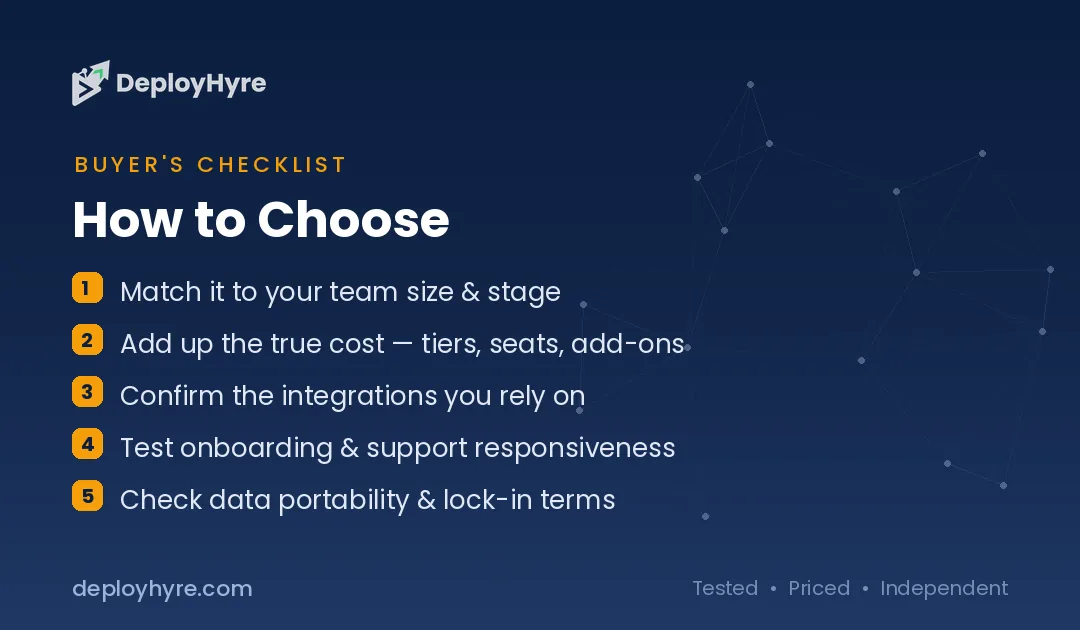
How Should You Choose an AI Proposal Tool?
Start with your content situation. If you have a deep library of winning answers, a retrieval-first tool like Loopio or Responsive maximizes reuse. If you write a lot of net-new narrative, a generation-first tool like AutogenAI or DeepRFP fits better. If proposals are one step in a bigger revenue motion, full-lifecycle tools like GovDash or Civio make sense.
Then match size and compliance. Bidara and Steerlab suit small and mid-market teams, enterprises need Loopio, Responsive, or AutogenAI, and government contractors need GovDash’s FedRAMP posture. Always pilot on a real bid and check the AI’s answers for accuracy before trusting them.
How We Evaluated These AI Proposal Tools
We assessed each tool on five criteria: writing quality, content reuse and library depth, compliance and security, collaboration, and pricing transparency. We mapped each to the three market tiers (retrieval-first, generation-first, full-lifecycle) and prioritized tools with published positioning and real 2026 usage. Proposal software pricing is often custom, so request a quote and a pilot before committing.
Can AI write a full business proposal?
Yes, as a strong first draft. AI drafts complete proposals from a brief, including scope, pricing sections, and summaries, and keeps tone consistent. You still tailor details, verify numbers, and add strategy. AI handles structure; you supply judgment.
Does AI proposal software work with RFPs?
Yes. Many tools answer RFP questions using your past responses and a content library. They cut repetitive work and keep answers consistent. Review each response for accuracy, since RFPs demand precise, compliant detail.
How does AI improve proposal win rates?
Through speed, consistency, and personalization. Faster turnaround beats slower competitors, and tailored, well-structured proposals read better to buyers. Results still depend on your offer and pricing, so use AI to sharpen the proposal, not replace strategy.
Writers can also compare the best AI for writing essays.
The Bottom Line
The best AI for proposal writing depends on your team and your content. AutogenAI leads on writing quality and ROI, Loopio and Responsive lead on enterprise content reuse, GovDash leads for government, and Bidara is the best balanced pick for small and mid-market teams.
Pick by tier and size, pilot on a live bid, and keep a human reviewing every answer for accuracy and compliance. Used well, AI turns proposal writing from a bottleneck into a competitive edge.
Next steps: See the bigger picture in our AI for business guide and pair proposals with the best AI tools for sales teams.
Frequently Asked Questions
What is the best AI for proposal writing?
It depends on your team. AutogenAI is best for AI-first writing quality and ROI, Loopio and Responsive are best for enterprise content libraries, GovDash is best for federal contractors, and Bidara is the best balanced choice for small and mid-market teams. Match the tool to your content situation, team size, and compliance needs.
How much does AI proposal software cost?
AI proposal software ranges from about $49/month for lean tools to $2,000+/month for enterprise suites in 2026. Mid-market tools like Bidara start at $299/month and Steerlab at $399/month, while enterprise and government platforms use custom pricing. Cost usually scales with proposal volume, users, content-library size, and compliance requirements.
What is the difference between retrieval-first and generation-first proposal tools?
Retrieval-first tools like Loopio and Responsive find and reuse your existing approved content, which is ideal if you have a large library. Generation-first tools like AutogenAI and DeepRFP create new narrative from scratch, which is better for net-new answers. Full-lifecycle tools combine both inside a broader capture-to-submission workflow.
Can AI write a full RFP response?
AI can draft a full RFP response, but it should not submit one unreviewed. The best tools generate strong first drafts and reuse winning content, but a human must verify accuracy, compliance, pricing, and messaging before submission. Treat AI as a drafting and reuse engine that accelerates your team, not a replacement for proposal expertise.
Are AI proposal tools secure for government bids?
Some are built specifically for it. GovDash, for example, is designed for federal contractors with FedRAMP requirements. For any regulated bid, confirm the vendor’s security posture, certifications, and willingness to sign the agreements your compliance team requires before uploading sensitive proposal content.

David Austin is a technology writer and software analyst at DeployHyre, where he covers AI tools, SaaS platforms, cloud hosting, and business automation. He focuses on hands-on comparisons of pricing, features, and real-world performance so teams can pick the right software with confidence.
Know AI, SaaS, or cloud tools inside out? Pitch a guest post and get in front of thousands of buyers researching their next tool.