AI can turn a blank page into a solid first draft in minutes. Used well, it is a research partner, an outline generator, and a tireless editor. Used badly, it produces bland, detectable, and academically risky work.
Table of Contents
For the full picture, see our complete guide to AI writing tools.
This guide separates the two. We tested the best AI for writing essays in 2026 on writing quality, research depth, citation support, and originality, then grouped tools by the job they do best. The goal is simple: write better essays faster while keeping the work genuinely yours. For the wider category, see our roundup of the best free AI tools for marketing and our AI for business guide.
A note up front: always follow your school’s AI policy. The responsible-use section below covers how to stay on the right side of academic integrity.
What Is the Best AI for Writing Essays?
The best AI for writing essays is a tool that helps you research, structure, draft, and refine your work while keeping your ideas and voice at the center. For most students, a general assistant like Claude or ChatGPT handles outlining, drafting, and editing best, while dedicated essay tools add citations, formatting, and originality checks. The right choice depends on whether you want broad reasoning power or essay-specific features.
Quality matters most. Claude and ChatGPT are the strongest tools for graduate-level academic writing due to their depth of reasoning and nuanced argument construction, with Claude favored for prose and ChatGPT for research-heavy work.
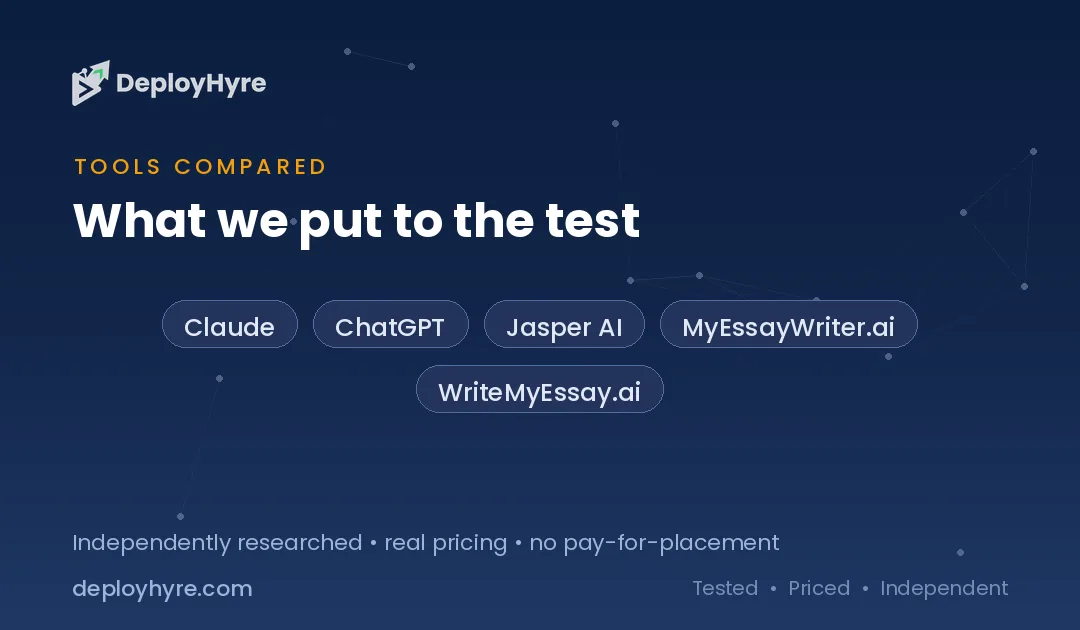
Quick Comparison: 8 Best AI Essay Tools
| Tool | Best For | Starting Price | Standout Feature |
|---|---|---|---|
| Claude | Highest-quality academic prose | $20/mo (free tier) | Long, coherent essays |
| ChatGPT | Research and versatility | $20/mo (free tier) | Reasoning + research |
| Jasper AI | Long-form, structured drafts | $49/mo | Workflow templates |
| MyEssayWriter.ai | All-in-one essay toolkit | Freemium | 25+ essay tools |
| WriteMyEssay.ai | Voice-matched drafting | ~$9.99/mo | Personal style profile |
| Undetectable AI | Humanizing and editing | Freemium | 8 rewriting modes |
| Phrasly | Natural-sounding rewrites | $12.99/mo | Free 550-word tier |
| GPTinf | Originality checking | ~$9/mo | Sentence-level plagiarism scan |
What Makes a Great AI Essay Tool?
A great AI essay tool produces clear, well-structured, original prose, supports your research with real sources, and keeps your voice intact. The best ones help you think, not just type, offering outlines, counterarguments, and edits rather than a finished essay to copy. Reliable citation support and an originality check are big pluses.
We weighed five things: writing quality, research and citation support, originality and detection risk, ease of use, and price.
Best General AI Tools for Essays
1 Claude: Best for High-Quality Academic Prose
Claude is the strongest all-round tool for essay writing in 2026, especially for longer, argument-driven work.
What it does well. Claude produces some of the most naturally flowing academic prose of any AI tool, with an extended context window that handles long essays and multi-section papers without losing coherence. It excels at outlines, nuanced arguments, and thoughtful editing.
Key features:
- Long-context handling for full essays
- Strong, natural academic prose
- Excellent at outlining and revising
- Thoughtful counterargument generation
Pricing. Free plan available; Claude Pro is $20/month.
Best for: Students and academics who want the best writing quality and long-form coherence.
Limitations. No built-in plagiarism checker or citation database, so pair it with a dedicated tool.
2 ChatGPT: Best for Research and Versatility
ChatGPT is the most versatile essay assistant, strongest when your topic needs research and data.
What it does well. It combines reasoning with research synthesis, making it ideal for data-heavy or discipline-specific essays. The free tier alone provides strong general essay support.
Key features:
- Strong reasoning and research synthesis
- Versatile across subjects and formats
- Capable free tier
- Wide ecosystem and integrations
Pricing. Free plan available; Plus is $20/month and Pro is $200/month.
Best for: Students who need research-driven essays and broad versatility.
Limitations. Can over-generalize without specific prompts, and like Claude lacks native plagiarism checking.
3 Jasper AI: Best for Structured Long-Form Drafts
Jasper adds workflow and templates on top of strong writing, suited to longer structured pieces.
What it does well. Jasper is built for professional long-form content and adapts to academic writing when configured with the right tone and structure, offering templates that speed up drafting.
Key features:
- Long-form templates and workflows
- Tone and brand-voice controls
- Useful for repeatable structures
- Team features
Pricing. Creator $49/month, Pro $59/month, Business custom.
Best for: Heavy writers who want templates and structure.
Limitations. Costs roughly 3x general tools, which is hard to justify for occasional essays.
Best Dedicated Essay Writing Tools
4 MyEssayWriter.ai: Best All-in-One Essay Toolkit
MyEssayWriter.ai bundles essay-specific features into one platform.
What it does well. Its 25+ tool set includes essay writing, paraphrasing, citation, and originality checks, covering the full essay workflow in one place.
Key features:
- 25+ essay-focused tools
- Paraphrasing and citation helpers
- Built-in originality checks
- Student-friendly interface
Pricing. Freemium with paid upgrades.
Best for: Students who want essay-specific features in one toolkit.
Limitations. Independent tests note essays can feel bland and the humanizer can over-elaborate, so edit the output.
5 WriteMyEssay.ai: Best for Matching Your Voice
WriteMyEssay.ai focuses on producing drafts that sound like you.
What it does well. It offers a personal stylistic profile that analyzes your previous writing to replicate your voice, plus an AI checker that scans drafts for detection probability.
Key features:
- Personal style profile for voice matching
- Detection-probability checker
- Drafting and refining tools
- Affordable student pricing
Pricing. Freemium; paid plans from about $9.99/month for students.
Best for: Students who want drafts in their own voice.
Limitations. Voice matching is only as good as the samples you provide, and output still needs human review.
Best Editing and Originality Tools
6 Undetectable AI and 7 Phrasly: Best for Natural Editing
These tools refine AI-assisted drafts into more natural prose.
What they do well. Undetectable AI offers eight rewriting modes (Academic, Formal, Informal, Creative, Simple, Standard, Expand, Shorten) with detection scores after each pass, while Phrasly produces natural-sounding rewrites with a free 550-word tier. Use them to smooth awkward phrasing, not to disguise unoriginal work.
Key features:
- Multiple rewriting and tone modes
- Natural-sounding output
- Detection-score feedback
- Free tiers to test
Pricing. Undetectable AI is freemium; Phrasly is $12.99/month with a free tier.
Best for: Polishing and tightening AI-assisted drafts.
Limitations. These should support honest editing, not academic dishonesty; misuse carries real risk.
8 GPTinf: Best for Originality Checking
Before you submit, check originality.
What it does well. GPTinf returns comprehensive plagiarism results with sentence-level breakdowns, helping you catch unintentional copying and fix it.
Key features:
- Sentence-level plagiarism detection
- Source identification
- Free tier (up to 500 words per scan)
- Simple workflow
Pricing. Paid plans from around $9/month.
Best for: A final originality check before submission.
Limitations. Free scans are word-limited, and no checker is perfect, so use judgment.
How Should You Choose the Right AI Essay Tool?
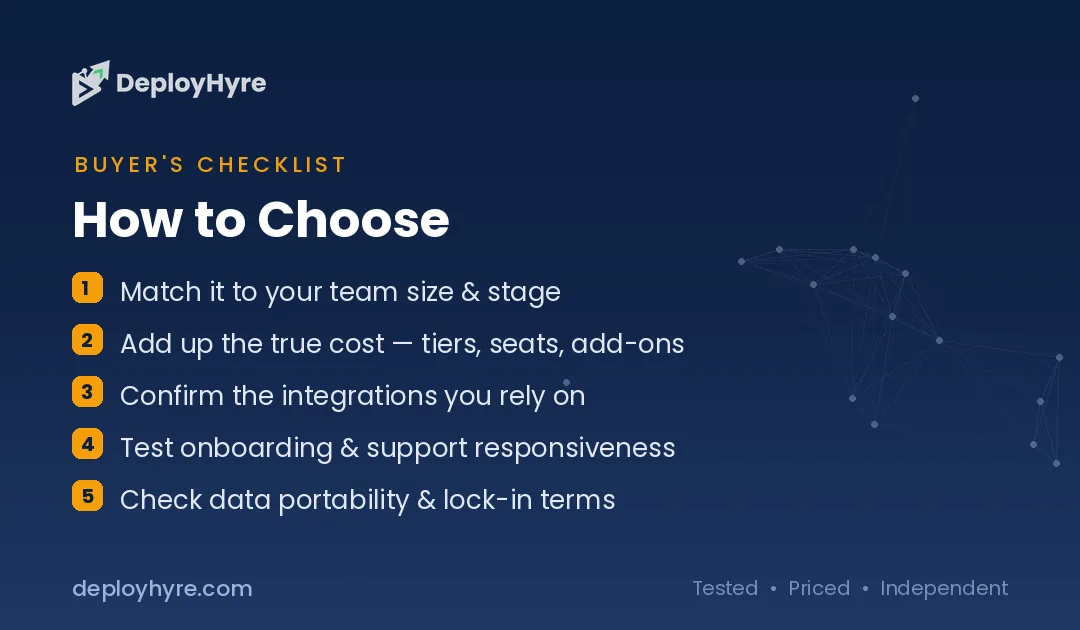
Start with quality: for most essays, Claude or ChatGPT at $20/month gives the best writing and reasoning. Add a dedicated tool only if you need essay-specific features like citations or voice matching (MyEssayWriter.ai, WriteMyEssay.ai). Keep an originality checker like GPTinf for a final pass, and use editing tools to refine, not to disguise.
Then match your budget and workload. Occasional essays rarely justify Jasper’s higher price, while heavy writers may value its templates. Whatever you pick, treat the AI as an assistant that accelerates your own thinking.
How to Use AI for Essays Responsibly
Using AI for essays is ethical when it supports your learning and complies with your institution’s policy. Use it to brainstorm topics, build outlines, explain concepts, get feedback, and edit grammar. Do not submit AI-generated text as your own original analysis where that is prohibited.
Three rules keep you safe. First, check your school’s AI policy before using any tool. Second, cite AI assistance if your institution requires disclosure. Third, verify every fact and citation the AI produces, because models can invent sources. Used this way, AI makes you a faster, sharper writer rather than a rule-breaker.
Is using AI to write essays considered cheating?
It depends on the rules. Many schools ban submitting AI-written work as your own, while allowing AI for brainstorming or editing. Check your institution policy. Use AI to research and refine, not to replace your own writing.
Can teachers detect AI-written essays?
Sometimes. Detection tools flag likely AI text, but they produce false positives and miss edited content. No detector is fully reliable. Treat AI as a drafting aid and write in your own voice to keep work authentic.
What is the best AI tool for essay writing?
The one that fits your need. Pick by task: research, drafting, or editing. Strong general writing assistants handle structure and clarity well. Always verify facts and citations, since AI can invent sources. Combine AI speed with your own checking.
Job seekers can also use the best AI for cover letters.
The Bottom Line
The best AI for writing essays in 2026 is the one that strengthens your own work. Claude wins on prose, ChatGPT on research, and dedicated tools add citations, voice matching, and originality checks. The combination of a strong general model plus an originality checker covers most students well.
Start with a free tier, write your outline and arguments yourself, and let the AI help you research, draft, and polish. Always run an originality check and follow your school’s policy before submitting.
Next steps: Explore more tools in our AI for business guide and our roundup of the best free AI tools for marketing.
Frequently Asked Questions
What is the best AI for writing essays?
For most students, Claude is the best AI for writing essays thanks to its natural academic prose and long-context handling, while ChatGPT is best for research-heavy topics. Both cost $20/month with capable free tiers. Dedicated tools like MyEssayWriter.ai add essay-specific features such as citations and originality checks. The best choice depends on whether you prioritize writing quality or essay-specific tools.
Is it cheating to use AI to write an essay?
It depends on how you use it and your school’s policy. Using AI to brainstorm, outline, explain concepts, and edit is widely accepted, while submitting AI-generated text as your own original analysis is often prohibited. Always check your institution’s AI policy, disclose assistance if required, and keep your own ideas and analysis at the center of the work.
Can teachers detect AI-written essays?
Sometimes. AI detection tools exist but are imperfect, producing both false positives and false negatives. Relying on humanizers to evade detection is risky and can violate academic integrity rules. The safer approach is to use AI as an assistant for research and editing, write your own arguments, and disclose assistance when required, rather than trying to disguise generated text.
What is the best free AI for essays?
ChatGPT and Claude both offer capable free tiers that handle outlining, drafting, and editing well, making them the best free options for most students. For originality, GPTinf and similar tools offer limited free plagiarism scans. Free tiers usually cap usage, so heavy users may need a $20/month plan, but casual essay help is very achievable for free.
Do AI essay tools include plagiarism checkers?
Some do and some do not. General tools like Claude and ChatGPT do not include plagiarism checkers, so pair them with a dedicated checker like GPTinf. Dedicated essay platforms such as MyEssayWriter.ai bundle originality checks into their toolkits. Always run a final originality scan before submitting, since no AI tool guarantees fully original output.

David Austin is a technology writer and software analyst at DeployHyre, where he covers AI tools, SaaS platforms, cloud hosting, and business automation. He focuses on hands-on comparisons of pricing, features, and real-world performance so teams can pick the right software with confidence.
Know AI, SaaS, or cloud tools inside out? Pitch a guest post and get in front of thousands of buyers researching their next tool.