Uncontrolled buying drains budgets. Research shows organizations lose up to 20 percent of potential savings to maverick spend, purchases made outside approved channels. For a company with $500 million in annual spend, that can mean tens of millions in lost value each year.
For the full picture, see our complete guide to AI for finance.
Table of Contents
AI procurement software brings that spend back under control. It guides buying, automates approvals, analyzes supplier data, and flags risk before money leaves. The market is growing with the need, projected to rise from about $8.96 billion in 2025 toward $22.88 billion by 2035, near a 9.8 percent yearly rate.
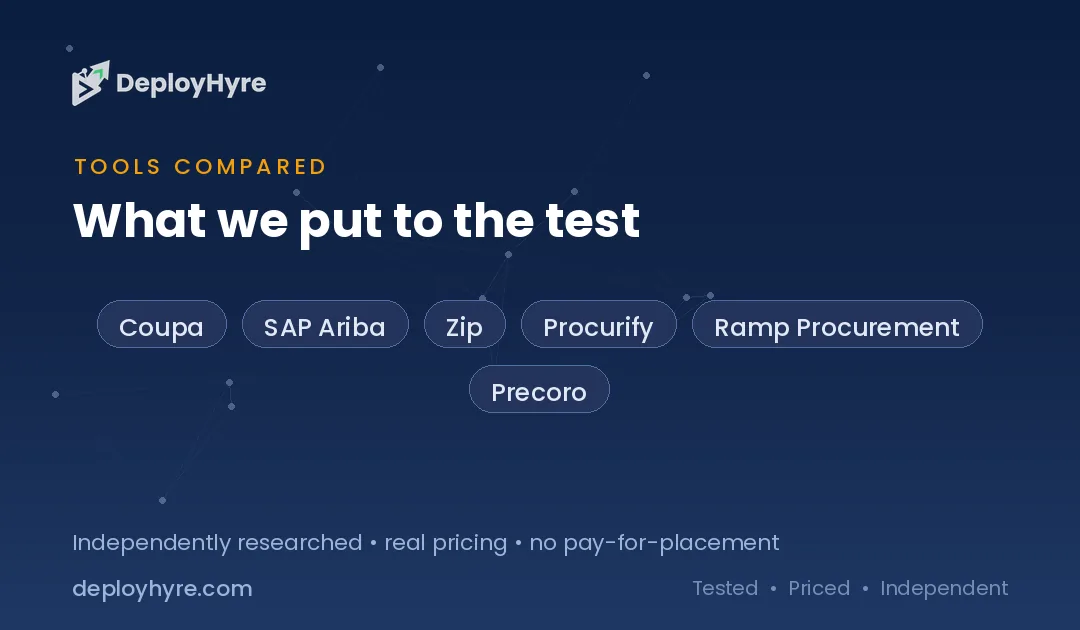
We tested 9 AI procurement platforms across spend visibility, automation, supplier tools, and price. This guide groups them by company size and need. For the wider stack, see our pillar on AI for business and our guide to AI accounts payable software.
Quick Comparison: Top 9 AI Procurement Tools
| Tool | Best For | Starting Price | AI Standout |
|---|---|---|---|
| Coupa | Enterprise source-to-pay | ~$2,500/mo | Predictive spend analytics |
| SAP Ariba | Global sourcing | Quote-based | AI-powered sourcing |
| Zip | Intake-to-pay | Quote-based | Guided intake orchestration |
| Procurify | Mid-market budget control | Quote-based | Real-time budget tracking |
| Ramp Procurement | Fast SMB deployment | Free / paid | Agentic intake and approvals |
| Precoro | Small business PO control | Paid tiers | AI approval workflows |
| Ivalua | Source-to-pay suite | Quote-based | AI supplier and risk tools |
| Tradeshift | Supplier networks | Quote-based | AI invoice and supplier data |
| Kissflow | No-code workflows | Quote-based | Configurable AI workflows |
What Is AI Procurement Software?
AI procurement software manages buying from request to payment using machine learning. It guides employees to approved suppliers, automates purchase orders and approvals, analyzes spend, and flags risk, so finance teams control cost and cut rogue buying.
Older procurement tools relied on manual forms and static rules. Modern platforms use AI to predict spend, recommend suppliers, and catch off-policy purchases. That matters because 91 percent of procurement leaders call maverick spend a challenge, and AI is the fastest way to rein it in.
What Makes the Best AI Procurement Software?
The best AI procurement software combines clear spend visibility, easy guided buying, supplier management, and ERP integration. Guided buying matters most, since it is how you stop maverick spend at the source.
We ranked each tool on five factors. First, spend visibility and analytics. Second, automation of intake, approvals, and purchase orders. Third, supplier and contract management. Fourth, ERP and accounting integrations. Fifth, pricing and time to value, since enterprise suites can take months to deploy while newer tools go live in weeks.
Best AI Procurement Software for Enterprise
Coupa, SAP Ariba, and Ivalua lead for large organizations that need full source-to-pay control. Each scales across global operations.
1 Coupa: Best for enterprise source-to-pay
Coupa is a comprehensive spend management platform for global enterprises.
What it does well. Coupa covers source-to-pay with AI-driven spend analytics, guided buying, and supplier management. Its community-sourced data improves spend insights across customers.
Key features:
- Predictive spend analytics
- Guided buying and approvals
- Supplier and contract management
- Invoicing and payments
Pricing. Basic Coupa packages can start around $2,500 per month, with enterprise deals far higher.
Best for: Large enterprises wanting full source-to-pay.
Limitations. Cost and implementation time are significant.
2 SAP Ariba: Best for global sourcing
SAP Ariba offers end-to-end source-to-pay with deep sourcing tools.
What it does well. SAP Ariba uses AI sourcing to aggregate demand, analyze bids, and manage complex scenarios across global suppliers. It fits enterprises already on SAP.
Key features:
- AI-powered sourcing and bidding
- Supplier network and management
- Contract and invoice management
- Deep SAP integration
Pricing. SAP Ariba uses enterprise quotes, and large contracts can reach $500,000 or more a year.
Best for: Global enterprises on SAP needing strong sourcing.
Limitations. Complex and costly to implement.
3 Ivalua: Best for a source-to-pay suite
Ivalua provides a unified source-to-pay suite with strong AI.
What it does well. Ivalua covers sourcing, contracts, procurement, and supplier risk in one configurable platform. It suits enterprises that want depth without stitching tools together.
Key features:
- AI supplier and risk management
- Full source-to-pay coverage
- Configurable workflows
- Spend analytics
Pricing. Ivalua uses custom enterprise quotes.
Best for: Enterprises wanting one configurable suite.
Limitations. Configuration depth needs dedicated resources.
Best AI Procurement Software for Mid-Market
Zip, Procurify, and Kissflow suit growing companies that want control without enterprise weight. Each deploys faster than legacy suites.
4 Zip: Best for intake-to-pay
Zip orchestrates intake-to-pay so every purchase starts in one place.
What it does well. Zip gives employees a simple intake front door, then routes approvals across finance, legal, and IT. It outscores legacy tools on ease of use for mid-market teams.
Key features:
- Guided intake orchestration
- Cross-team approval routing
- Spend and vendor visibility
- ERP and tool integrations
Pricing. Zip uses custom quotes with flexible models.
Best for: Mid-market teams wanting easy intake-to-pay.
Limitations. Pricing is not public.
5 Procurify: Best for mid-market budget control
Procurify centers procurement on real-time budget control.
What it does well. Procurify tracks spend against budgets in real time and automates purchase orders and approvals. It earns high satisfaction scores from mid-sized organizations.
Key features:
- Real-time budget tracking
- Purchase order automation
- Approval workflows
- Spend reporting and cards
Pricing. Procurify uses custom quotes by business size.
Best for: Mid-market teams focused on budget control.
Limitations. Pricing requires a quote.
6 Kissflow: Best for no-code workflows
Kissflow offers configurable procurement on a no-code platform.
What it does well. Kissflow lets teams build custom procurement workflows without code, with AI to streamline approvals. It suits organizations with unique processes.
Key features:
- No-code workflow builder
- AI-assisted approvals
- Purchase and vendor management
- Custom reports and dashboards
Pricing. Kissflow uses custom quotes.
Best for: Teams that need configurable workflows.
Limitations. Custom builds take setup time.
Best AI Procurement Software for Small Business
Ramp Procurement, Precoro, and Tradeshift give smaller teams control and speed at a lower entry point. Each deploys quickly.
7 Ramp Procurement: Best for fast SMB deployment
Ramp folds procurement into its spend platform for fast setup.
What it does well. Ramp uses agentic AI to handle intake, code purchases, and route approvals, tied to cards and bill pay. SMBs deploy quickly without heavy implementation.
Key features:
- Agentic intake and approvals
- Tied to cards and bill pay
- Real-time spend controls
- ERP integrations
Pricing. Ramp’s core spend tools are free, with paid tiers for advanced controls.
Best for: SMBs wanting fast, low-cost procurement.
Limitations. Less suited to complex global sourcing.
8 Precoro: Best for small business PO control
Precoro brings purchase order control to small and growing teams.
What it does well. Precoro automates purchase orders, approvals, and budgets at an accessible price, deploying faster than enterprise suites. It suits teams formalizing procurement for the first time.
Key features:
- AI approval workflows
- Purchase order and budget control
- Supplier management
- Spend analytics
Pricing. Precoro offers paid tiers with a demo.
Best for: Small businesses adding PO control.
Limitations. Lighter sourcing than enterprise tools.
9 Tradeshift: Best for supplier networks
Tradeshift connects buyers and suppliers on a digital network.
What it does well. Tradeshift combines procurement with a supplier network and AI for invoice and supplier data. It suits companies that want to digitize supplier collaboration.
Key features:
- Buyer-supplier network
- AI invoice and supplier data
- Procure-to-pay workflows
- Marketplace and apps
Pricing. Tradeshift uses custom quotes.
Best for: Companies digitizing supplier collaboration.
Limitations. Value depends on supplier adoption.
How Should You Choose the Right Procurement Tool?
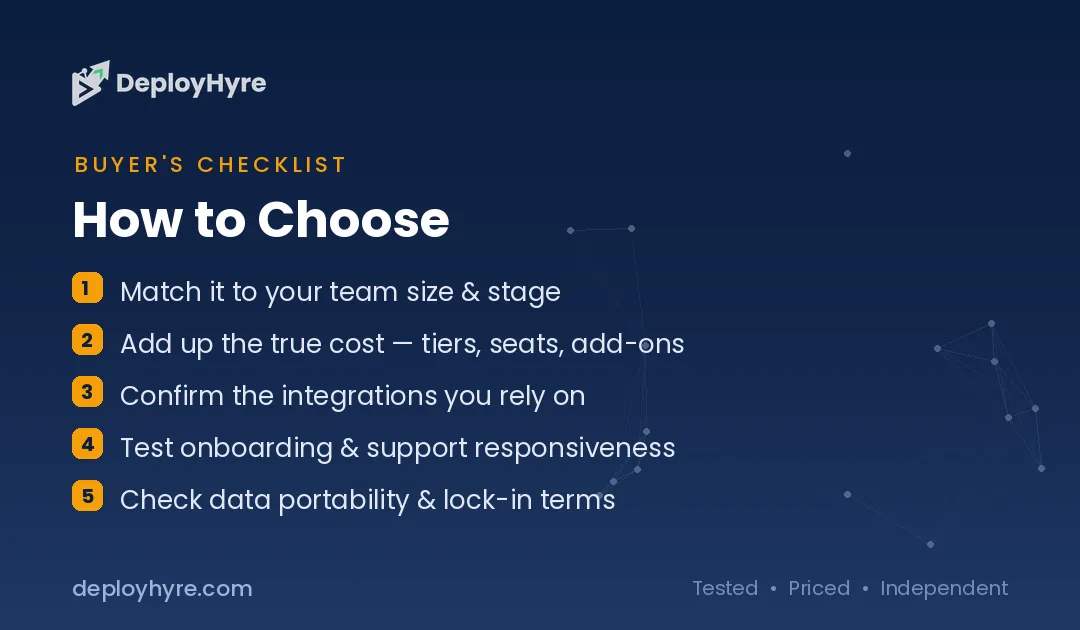
Choose based on company size, sourcing complexity, and your ERP. Enterprises fit Coupa or SAP Ariba. Mid-market teams fit Zip or Procurify. Small businesses fit Ramp or Precoro.
Start with company size and complexity. Global sourcing needs Coupa, Ariba, or Ivalua, while a growing team is better served by Zip or Procurify. Next, focus on guided buying, since that stops maverick spend. Then confirm ERP and accounting integration. Finally, weigh time to value, since newer tools deploy in weeks against months for legacy suites. To connect procurement to the rest of finance, see our guides to AI expense management software and AI financial analysis software.
How We Evaluated These Procurement Tools
We assessed each platform on spend visibility, automation, supplier management, integrations, and price. We reviewed vendor documentation, published pricing where available, independent comparisons, and market data from precedence and other analysts. We weighted guided buying and time to value most heavily. We did not accept marketing claims without a source. Pricing reflects publicly listed ranges as of June 2026 and can change.
The Bottom Line
Coupa wins for enterprise source-to-pay, Zip for mid-market intake, and Ramp for fast SMB deployment. The right pick depends on company size, sourcing complexity, and your accounting system. Purchasing plans start with demand, and our guide to AI demand forecasting software compares the platforms that produce it.
With maverick spend draining up to 20 percent of savings, the payback on guided buying is fast. Run a pilot, measure policy compliance and savings, and scale from there. To complete the spend cycle, read our guides to AI accounts payable software and whether AI will replace accountants.
Frequently Asked Questions
What is the best AI procurement software?
Coupa leads for enterprise source-to-pay, Zip for mid-market intake-to-pay, and Ramp Procurement for fast small-business deployment. The best choice depends on company size, sourcing complexity, and your ERP system.
How much does AI procurement software cost?
Pricing varies widely. Basic Coupa packages start around $2,500 per month, and SAP Ariba contracts can exceed $500,000 a year. Ramp offers free core tools, while most mid-market platforms use custom quotes.
What is maverick spend?
Maverick spend is buying done outside approved procurement channels. It is costly, with organizations losing up to 20 percent of potential savings, and 91 percent of procurement leaders call it a challenge. Guided buying tools reduce it.
How does AI reduce procurement costs?
AI guides employees to approved suppliers, automates approvals, predicts spend, and flags off-policy purchases. By cutting maverick spend and improving supplier negotiation, AI procurement tools recover savings that manual processes miss.
Does AI procurement software integrate with ERPs?
Yes. Platforms like Coupa, Zip, and Ramp integrate with ERP and accounting systems such as NetSuite, SAP, and QuickBooks. Native integration keeps purchase, budget, and payment data connected across finance.

David Austin is a technology writer and software analyst at DeployHyre, where he covers AI tools, SaaS platforms, cloud hosting, and business automation. He focuses on hands-on comparisons of pricing, features, and real-world performance so teams can pick the right software with confidence.
Know AI, SaaS, or cloud tools inside out? Pitch a guest post and get in front of thousands of buyers researching their next tool.