Frase is the better pick if you want fast, research-driven content briefs and affordable AI drafting, while Surfer wins for data-heavy on-page optimization and agencies managing many pages. Both tools analyze what already ranks and turn it into a concrete plan for your next article, but they lean in opposite directions: Frase starts from a research brief and drafts in your voice, while Surfer scores every paragraph against the SERP in real time. The right answer depends on whether your bottleneck is producing content or optimizing it.
Here is the honest version of this comparison. Both platforms have repositioned around AI search and GEO (getting cited inside ChatGPT, Gemini, and Google’s AI answers), so the feature lists now overlap more than they did a year ago. The deciding factors are workflow fit, how each one meters usage, and price. Pricing below is quoted directly from each vendor’s public pricing page and should be treated as bands, not promises, plans, limits, and promotional discounts shift, and annual billing changes the sticker price. Always confirm the current number before you buy.
Quick Comparison: Frase vs Surfer at a Glance
| Tool | Best For | Entry Price | Note |
|---|---|---|---|
| Frase | Research, content briefs, and affordable AI drafting for solos and single-site teams | From ~$39/mo (Starter, billed yearly; ~$49/mo month-to-month) | Entry plan covers 1 seat, 1 site, ~10 articles + 50 audit pages per month |
| Surfer | SERP-driven on-page optimization, content scoring, and agencies tracking many pages | From ~$49/mo (Discovery, billed yearly) | Discovery covers ~120 documents and 10 tracked pages; team seats start higher up the ladder |
What an SEO Content Tool Actually Does
An SEO content tool sits between keyword research and publishing. It pulls the pages currently ranking for your target query, extracts the terms, questions, headings, and structure they share, and hands you a data-backed blueprint for a page that can compete. Some tools stop at the brief; others carry you all the way through drafting, real-time scoring, and post-publish monitoring.
These tools are a different category from all-in-one SEO suites built around backlinks and rank tracking, if that is what you are weighing, see our guide to the best AI SEO tools for the wider landscape. Frase and Surfer both live in the content-optimization slice: they exist to make a single page more complete, more relevant, and more likely to earn both a Google ranking and a citation in AI search. Where they diverge is the center of gravity. Frase orbits research and drafting; Surfer orbits the on-page optimization score.
The Core Difference: Briefs vs SERP-Driven Optimization
Frase’s workflow begins with research. You enter a query, and it aggregates the top-ranking results into a summarized brief, headings, statistics, and the People Also Ask questions that define the topic, then lets its AI agent draft the piece in a brand voice you configure. The mental model is “research ends in a brief, brief ends in a draft.” Frase meters usage primarily in articles and audit pages per month, which maps cleanly to how a publisher actually plans a content calendar.
Surfer’s workflow begins with the score. Its Content Editor gives you a live Content Score from 0 to 100 as you write, driven by an analysis it describes as covering hundreds of web and AI signals: term coverage, word count, heading count, image count, and more, all benchmarked against the current top results. The mental model is “write against the SERP until the number is green.” Surfer meters usage in documents (articles you create or optimize) and tracked pages, and gates AI-search prompt tracking and team seats by tier.
| Dimension | Frase | Surfer |
|---|---|---|
| Primary strength | Research summaries and content briefs that end in a draft | Real-time on-page Content Score against live SERP data |
| AI writing | AI agent drafts in a configured brand voice; included from entry plan | Surfy AI assistant and humanizer; included from entry (Discovery) plan |
| Usage metering | Articles + audit pages per month (e.g. ~10 articles / 50 audit pages on Starter) | Documents + tracked pages (e.g. ~120 documents / 10 pages on Discovery) |
| SERP analysis | Aggregated top-results research and topic clusters | SERP Analyzer with term, structure, and competitor benchmarking |
| Entry price | From ~$39/mo (Starter, billed yearly) | From ~$49/mo (Discovery, billed yearly) |
| Team seats | 3 seats on Professional (~$103/mo yearly) | 1 seat on Discovery; 3 seats on Standard (~$99/mo yearly) |
Best for Research & Briefs
Winner: Frase. If your bottleneck is the blank page, turning a keyword into a structured, sourced outline you can hand to a writer or an AI agent, Frase is purpose-built for it. It reads the ranking pages, condenses them into a research summary, surfaces the questions real searchers ask, and maps topic clusters so you brief a whole silo rather than one post at a time. The output is a brief that already contains the headings and statistics you need to cover, which is exactly the hand-off point most content teams struggle with.
Frase’s entry Starter plan runs about $39/mo billed yearly (roughly $49/mo month-to-month) and includes around 10 articles and 50 audit pages per month on one site with one seat, enough for a solo publisher or a single-site niche builder. Stepping up to Professional at about $103/mo billed yearly (~$129/mo monthly) adds 3 seats, 5 sites, and roughly 40 articles plus 250 audit pages, along with a content calendar and internal-linking suggestions. If your process is closer to briefing-and-drafting than scoring-and-polishing, Frase gives you more usable output per dollar. For pairing that drafting with a dedicated writing workflow, our roundup of the best AI tools for blog writing covers the complementary options. Verdict: Frase is the research-and-briefs engine, and it is the more affordable on-ramp.
Best for On-Page Optimization & Agencies
Winner: Surfer. When the job is to take a draft, yours, a freelancer’s, or an AI’s, and optimize it until it can outrank the current top ten, Surfer’s Content Editor is the sharper instrument. The live Content Score turns optimization into a concrete target, and the SERP Analyzer lets you inspect exactly why competing pages rank so you can close the gap on terms, structure, and depth. Agencies lean on Surfer for a specific reason: its higher tiers add multiple brand workspaces, team seats, cannibalization reports, one-click internal linking, and larger page-tracking allowances, which matter when you are optimizing across many client sites at once.
Surfer’s entry Discovery plan is about $49/mo billed yearly for roughly 120 documents, 10 tracked pages, and a single seat, a solo-writer tier. The volume plans climb faster than Frase’s: Standard is around $99/mo (3 seats, ~360 documents, 50 tracked pages), Pro sits near $182/mo, and the top self-serve Peace of Mind tier is about $299/mo with unlimited* documents and API access (subject to a fair-usage policy). That ladder is built for agencies and in-house teams, not hobbyists. If you are specifically weighing Surfer against its competitors, our Surfer SEO alternatives breakdown covers where each rival wins. And if your real question is about the broader research suites rather than content scoring, the Semrush vs Ahrefs comparison is the better starting point. Verdict: Surfer owns on-page optimization and is the stronger agency platform, but you pay for that scale.
Best for Budget & Solo Writers
Winner: Frase (narrowly). For a solo writer or a bootstrapped affiliate site, the entry prices land close, Frase’s Starter at about $39/mo billed yearly versus Surfer’s Discovery at about $49/mo billed yearly, but the value calculus tips toward Frase. Frase’s Starter bundles research, briefs, AI drafting, SEO and GEO scoring, and publishing to WordPress or other CMSs in one seat, so a single person can run the whole content loop. Surfer’s Discovery is a capable writing-and-optimization tier, but AI-search prompt tracking and team collaboration only unlock further up the ladder.
The caveat: budget is about more than the first invoice. Watch how each tool meters your work. If you publish a handful of thorough articles a month, Frase’s article allowance is generous. If you optimize and re-optimize many existing pages, Surfer’s document model may fit better despite the higher entry cost. Either way, start on the lowest plan, confirm the current price on the vendor’s page (both discount heavily for annual billing), and only upgrade once you hit a real ceiling. Verdict: Frase edges it for solo writers on both price and all-in-one coverage, but the gap is small enough that your workflow should decide.
How Should You Choose Between Frase and Surfer?
Start with your bottleneck, not the feature list. If you spend most of your time staring at blank documents and wishing you had a researched outline, Frase removes that friction, it turns a keyword into a brief and a draft, and it meters in articles, which is how publishers plan. If you already generate drafts easily but struggle to make them rank, Surfer’s live scoring and SERP Analyzer give you a measurable target to optimize against.
Next, weigh your scale and team. A solo operator on one site gets more from Frase’s all-in-one Starter plan at a lower entry price. An agency or in-house team juggling multiple brands, many tracked pages, and collaborative seats will find Surfer’s Pro and Peace of Mind tiers built for exactly that, even though they cost more. Seats, brand workspaces, and page-tracking limits are where the two ladders diverge most, so map your real team size against each tier before committing.
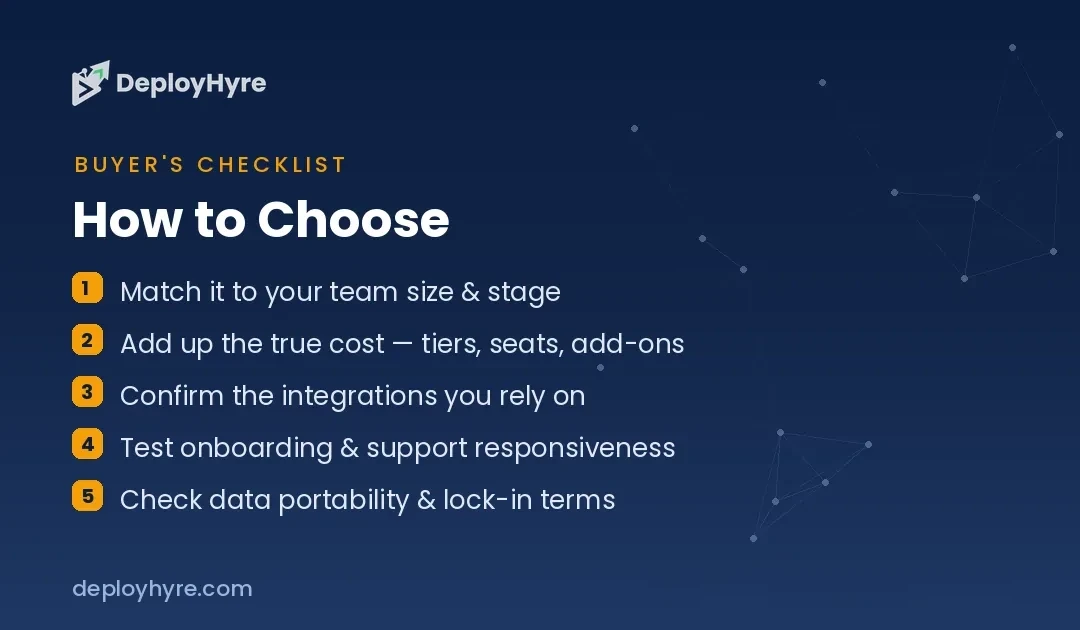
Finally, factor in AI search. Both tools now market heavily around GEO and getting cited in ChatGPT, Gemini, and Google’s AI answers, and both gate the deepest AI-visibility tracking behind higher plans. If AI citation monitoring is central to your strategy, compare exactly how many AI prompts and engines each tier covers rather than trusting the headline. The best move is to run each tool’s free trial on the same target keyword and see which output you would actually publish.
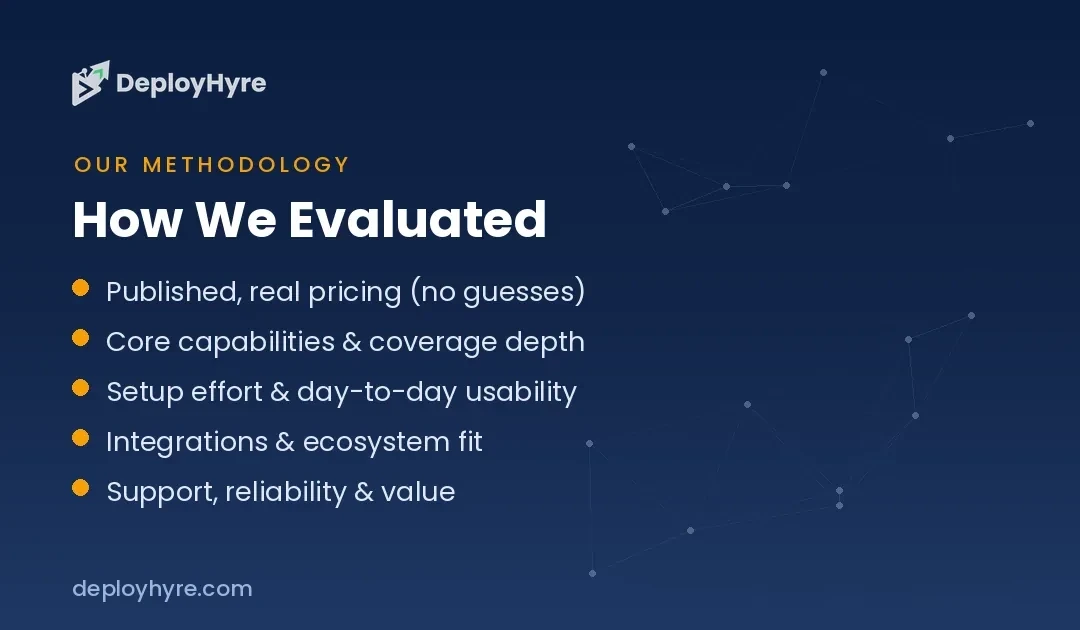
How We Evaluated Frase and Surfer
We based this comparison on each vendor’s public product and pricing pages, cross-referenced against the documented feature limits for every tier. Pricing is treated as bands rather than fixed figures because both companies adjust plans, promotional discounts, and annual-versus-monthly rates frequently; we quote the lowest publicly listed entry price for each and flag it as approximate. No number here is invented, and we did not test private beta features or quote figures we could not source.
When we recommend a tool for a use case, that recommendation reflects how the tool’s documented capabilities and pricing map to that use case, not any commercial relationship. Affiliate links, where present, never change which tool wins a category. Because SaaS pricing moves quickly, confirm the current plan details on the vendor’s own pricing page before you purchase, the bands here are a guide to relative positioning, not a substitute for the live quote.
The Bottom Line
Frase and Surfer solve the same problem from opposite ends. Choose Frase if your bottleneck is producing content: it is the research-and-briefs engine, it drafts in your voice, it meters in articles, and it is the cheaper, more complete on-ramp for solos and single-site teams, entry from about $39/mo billed yearly. Choose Surfer if your bottleneck is optimization: its live Content Score and SERP Analyzer are the sharpest on-page tools available, and its higher tiers are purpose-built for agencies managing many pages and brands, entry from about $49/mo billed yearly, climbing steeply for team plans.
For most solo publishers and affiliate sites, Frase is the smarter first purchase. For agencies and in-house teams whose value is in polishing and scaling optimization across many client pages, Surfer earns its higher price. Trial both on one real keyword, confirm today’s pricing on each vendor’s page, and let the output you would genuinely publish make the call.
Frequently Asked Questions
Is Frase cheaper than Surfer?
At the entry level they are close. Frase’s Starter plan lists at about $39/mo billed yearly (roughly $49/mo month-to-month), while Surfer’s Discovery plan lists at about $49/mo billed yearly. Frase’s Starter bundles more of the full content loop into one seat, so it tends to offer more per dollar for solos. Confirm current pricing on each vendor’s page, since both discount annual billing.
What is the main difference between Frase and Surfer?
Frase is built around research and content briefs that end in an AI-written draft, and it meters usage in articles per month. Surfer is built around a real-time on-page Content Score that grades your draft against the live SERP, and it meters usage in documents and tracked pages. Frase favors producing content; Surfer favors optimizing it.
Can Frase and Surfer both help with AI search visibility?
Yes. Both have repositioned around GEO and AI search, offering tracking for whether your brand is cited in tools like ChatGPT, Gemini, Perplexity, and Google’s AI answers. The depth of that tracking, how many AI prompts and engines are covered, scales with the plan tier on both platforms, so compare the specific tier limits rather than the headline claims.
Is Surfer or Frase better for agencies?
Surfer is generally the stronger agency platform. Its Pro tier (around $182/mo) and Peace of Mind tier (around $299/mo) add multiple brand workspaces, more team seats, cannibalization reports, one-click internal linking, and larger page-tracking limits, all built for optimizing across many client sites. Frase supports teams too, but its plans are sized more for single brands and in-house content teams.
Do I need both Frase and Surfer?
Usually not. They overlap heavily on research, AI writing, and optimization, so most users pick one. Some teams do pair Frase for fast briefing and drafting with Surfer for final on-page scoring, but that doubles your cost. Start with the one that matches your bottleneck, content production points to Frase, optimization points to Surfer, and add the second only if a real gap appears.
Related Articles

The DeployHyre Editorial Team writes buyer guides on AI tools, SaaS, cloud hosting and proxies. We compare tools using published pricing, official documentation and third-party reviews. All content is for educational and informational purposes only.